Ghost Hunt Locations - 2024
Bristol - Devon - Dorset - Essex - Hampshire - Hertfordshire - Kent - London - Oxfordshire - Shropshire - Somerset - Suffolk - Sussex - Wiltshire - Ghost hunting nights, ghost hunts, ghost tours, ghost evenings and ghost weekends. We organise ghost hunting events for indoor and outdoor locations and are based in the South East of England and travel all over the United Kingdom (UK) and into Europe to hold private and public ghost hunting nights.
Scare Factor:
Read previous customer Feedback/Testimonials
Information on Beacon Hill Fort
Click to watch previous ghost hunt videos (Opens in a new window)
This location is available to book for private group events (5-20 people) - price depending on people - see Private Group Ghost Hunts
The next event:
Date: 27th April 2024
Time: 8.00pm - 2.00am
Tickets: £40 per person
Beacon Hill Fort · Harwich, Essex
///saved.amicably.driven - What's this?
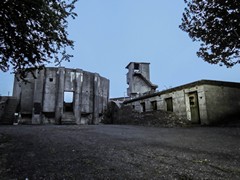
Beacon Hill Fort in Harwich, Essex was originally three blockhouses, constructed during the reign of Henry VIII, following his visit to the town in 1543.
The site was chosen for Harwich Barracks. These were built in 1803. They subsequently housed most of the Harwich army and militia camp during almost the whole French Revolutionary and Napoleonic Wars era, and a naval signal station.
In 1889 work began on a totally new fort, which was completed in 1892. The fort saw use in World War One, and was re-adapted in World War Two. The Beacon Hill site also from time to time housed anti-aircraft guns and torpedo tubes.
The fort was finally decommissioned in 1956.
Uncertainty still surrounds the death of Gregory Chung whose burnt and decomposing body was found at the Beacon Hill fort at Harwich in 2000. A murder inquiry was launched but the inquest heard it was probable Mr Chung, 23, set fire to himself.
Scare Factor:
Read previous customer Feedback/Testimonials
Information on Bilsington Priory
This location is available to book for private group events (5-20 people) - price depending on people - see Private Group Ghost Hunts
The next event:
Date: 13th September 2024
Time: 8pm until 2am
Tickets: £45 per person
Bilsington Priory · Ashford, Kent
///flames.yawned.eclipses - What's this?
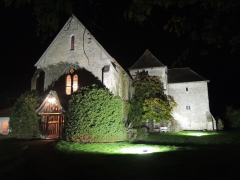
St Augustine's Priory, Bilsington, Kent was founded by John Mansel in June 1253 with the consent of Henry III and the Archbishop of Canterbury professing the rule of St Augustine.
The foundation charter was confirmed by a charter of Henry III, dated 12 June, 1253, which was confirmed afterwards by Henry VI in 1444 and Edward IV in 1466.
St Augustine's Priory was surrendered to the crown in 1535 and it was abandoned at Henry VIII's dissolution of the monasteries in 1538.
During the 1820s it was a base for smuggling gangs namely the Ransley Gang and The Aldington Gang. The Priory was restored 1906 by J.T. Micklethwaite, Architect
During the Second World War troops were billeted at St Augustine's Priory and at some point it was also an infirmary.
St Augustine's Priory has had a long and varied history and during our site visit we came across two Canadian Soldiers from the Second World War and a lady in Victorian dress lazing near to the pond.

Scare Factor:
Information on British Schools Museum
This location is available to book for private group events (5-20 people) - price depending on people - see Private Group Ghost Hunts
The next event:
Date: 28th September 2024
Time: 8pm until 2am
Tickets: £49 per person
British Schools Museum · Hitchin, Hertfordshire
///risks.shops.horns - What's this?
The British Schools Museum is in original Edwardian and Victorian school buildings in Hitchin in Hertfordshire, England. The museum complex is made up of school buildings housing infants, girls and boys schools with houses for Master and Mistress. It includes a monitorial schoolroom based on the educational theories of Joseph Lancaster for 300 boys, which opened in 1837, and a rare galleried classroom, dating from 1853.
The first school on the site was a schoolroom for 200 boys and 100 girls. It was founded in 1810 by local lawyer William Wilshere in a disused malthouse. This schoolroom was the first monitorial school for the sons of the poor in Hertfordshire. Teaching was based on Joseph Lancaster's methods of monitorial teaching. He developed a system in which large numbers of younger scholars could be taught by older scholars under the supervision of the master (for boys) or mistress (for girls). This method continued until the Revised Code of 1862 that brought in the Pupil Teacher method of teaching.
The school grew steadily and to such an extent that in 1837 a new schoolroom was built that could hold 300 boys. This was completed in 1838.
In 1857, it was decided by the School's Board of Trustees to completely rebuild the Girls' and Infants' School. The new building was completed in 1858 together with adjoining houses for the Master and Mistress.
It remained as a school until 1969.
Ghostly Activity includes full body apparitions, loud footsteps and crying voices.
Scare Factor:
Read previous customer Feedback/Testimonials
Information on Charlton House
Click to watch previous ghost hunt videos (Opens in a new window)
The next event:
Date: 27th September 2024
Time: 8:30pm - 2:00am
Tickets: £60 per person
Charlton House · Greenwich, London
///teach.posts.racing - What's this?
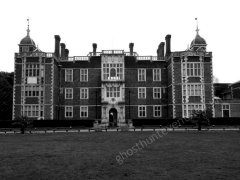
Charlton House in Greenwich, London was built between 1607 and 1612 by Sir Adam Newton, Charlton House is one of the finest examples of Jacobean domestic architecture in the country.
The house and grounds were used as a hospital for officers during World War I and were bought by the Metropolitan Borough of Greenwich in 1925. The North (Chapel) Wing was bombed during the Blitz of the Second World War and was subsequently rebuilt albeit with non-matching bricks such as were available in the immediate post-war period.
Scare Factor:
Information on Deal Castle
This location is available to book for private group events (5-20 people) - price depending on people - see Private Group Ghost Hunts
The next event:
Date: 7th September 2024
Time: 7pm until 1am
Tickets: £46 per person
Deal Castle · Deal, Kent
///lake.rock.topic - What's this?
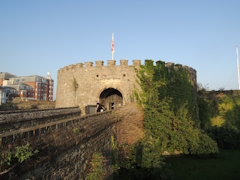
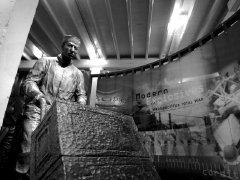
Deal Castle is an artillery fort constructed by Henry VIII in Deal, Kent, between 1539 and 1540. It protected against invasion from France. The Castle comprises of a keep with six inner and outer bastions, the moated stone castle and had sixty-six firing positions for artillery.
During the Second English Civil War of 1648–49, Deal was seized by pro-Royalist insurgents and was only retaken by Parliamentary forces after several months' of fighting.
Although it remained armed, Deal Castle was adapted by Sir John Norris and Lord Carrington during the 18th and 19th centuries to form a more suitable private house for the castle's captain, which was an honorary position.
In 1904, the War Office concluded that the castle no longer had any value either as a defensive site or as a barracks and it was opened to the public when the captain was not in residence. Early in the Second World War, the captain's quarters were destroyed by German bombing and the castle became a Battery Operating Post (one of the first-floor rooms in the keep became the Battery Office) for an artillery battery placed along the shore line. The castle was not brought back into use as a residence and was restored by the government during the 1950s to form a tourist attraction.
Scare Factor:
Read previous customer Feedback/Testimonials
Information on Explosion Museum
The next event:
Date: 2nd November 2024
Time: 7:30pm until 01:30
Tickets: £60 per person
Explosion Museum · Gosport, Hampshire
///relay.stone.animal - What's this?
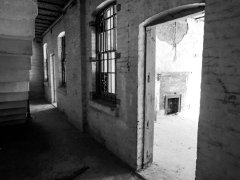
The Explosion Museum (Priddy's Hard)in Gosport, Hampshire was originally bought in 1750 by the Board of Ordnance from Jane Priddy (hence Priddy's Hard) and others to construct the defences of Portsmouth Harbour and the Dockyard. The defences were completed in 1756. Soon afterwards the gunpowder stores were relocated from Portsmouth to Priddy's Hard for safety reasons and in 1771 a magazine, office and cooperage were constructed. Officer's houses and large gardens were added in 1777.
In 1805 the Grand Magazine on the site was used to store Gunpowder that was delivered to Priddy's Hard from Waltham Abbey. Gunpowder was transported from this Magazine to the Trafalgar Fleet via a Camber Dock, the Fleet included Nelson's Flagship HMS Victory.
In 1861 C Magazine was built and in 1879 the largest magazine, E Magazine was built. During the 1860s the fortifications were strengthened incorporating brick gateways, carponniers and or covered firing positions to cover the moats, Armstrong guns were fitted to the two demi-bastions.
The site was fully utilised during the Second World War and was last used for significant naval activity during the Falklands Conflict in 1982, the site remained active until 1988.
Twelve untimely deaths have happened at Priddy's Hard as a result of accidental explosions and in one case an "unnatural" gust of wind, rumoured to be the evil spirit of a convict labourer who died in the same spot.
Sightings of the unfortunate souls have been rumoured by former workers of the Royal Navy Armaments Depot over the years including security guards that have looked after the listed buildings.
Scare Factor:
Read previous customer Feedback/Testimonials
Information on Fort Burgoyne
Click to watch previous ghost hunt videos (Opens in a new window)
This location is available to book for private group events (5-20 people) - price depending on people - see Private Group Ghost Hunts
The next event:
Date: 10th August 2024
Time: 8pm until 2am
Tickets: £46 per person
Fort Burgoyne · Dover, Kent
///feed.rests.axed - What's this?
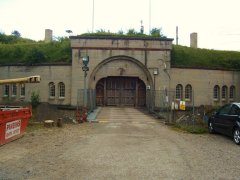
Fort Burgoyne in Dover, Kent was originally known as Castle Hill Fort. Work started in 1861 and it was complete in 1868 as one of the Palmerston forts surrounding the South of England.
It was built to a polygonal system with detached eastern and western redoubts with a surrounding ditch, flanked by three demi-caponniers and a double caponnier to the North. Two detached wing batteries to the East and West of the main fort were also constructed in spurs off the main ditch. The main fort comprised a large parade ground, to the North of which was a long row of casemates, which provided the barrack accommodation for soldiers and officers. Above the casemates, on the terreplein, were Haxo Casemates, which housed the guns.
This was to guard the high ground northeast of the strategic port of Dover, just north of Dover Castle.
The fort is named after the 19th century General John Fox Burgoyne.
After the First World War Fort Burgoyne was used as military depot or store for Connaught Barracks. Until recently the central part of the fort was still owned by the Ministry of Defence, forming part of the Connaught Barracks site.
There were two mysterious deaths in February 1887, two men died for no known reason.
Scare Factor:
Read previous customer Feedback/Testimonials
Information on Fort Horsted
This location is available to book for private group events (5-20 people) - price depending on people - see Private Group Ghost Hunts
The next event:
Date: 29th June 2024
Time: 8pm until 2am
Tickets: £46 per person
Fort Horsted · Chatham, Kent
///taped.lace.bills - What's this?
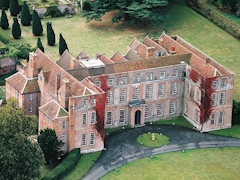
Fort Horsted was the largest of the five forts designed to defend Chatham's eastern and southern approaches. Many changes were made to the original design of Horsted since its inception in the 1860's. Most noticeably Fort Horsted does not have caponiers or other exposed external features clearly visible in earlier works such as the Drop Redoubt in Dover. This was due to the development of high explosive shells in the intervening period between the 1860's and the eventual construction some twenty years later. Fort Horsted was finished by 1889, but never received the full compliment of armament she was designed for. In 1902 Fort Horsted was mounted with seven machine guns. In the Second World War AA guns were mounted at the Fort.
Scare Factor:
Information on Glemham Hall
This location is available to book for private group events (5-20 people) - price depending on people - see Private Group Ghost Hunts
The next event:
Date: 6th September 2024
Time: 8pm until 2am
Tickets: £65 per person
Glemham Hall · Little Glemham, Woodbridge, Suffolk
///structure.helpers.potions - What's this?
Glemham Hall is situated in Little Glemham, Woodbridge in Suffolk. Glemham Hall was built in 1560s by the De Glemham family. The Glemhams retained the estate until 1708-1709 when it was sold to Dudley North. Glemham Hall remained within the North family for more then 200 years. In 1923 it was purchased by the Cobbold family and became the home of Captain John Murray Cobbold who was killed during World War Two. When his wife died in 1987, the estate passed to her son, Patrick. Sadly, he died suddenly in 1994, where upon Major Philip Hope Cobbold inherited the estate and resided until his death in 2020. Philip's eldest son Thomas now lives at Glemham Hall with his wife and family.
The staircase has been known to have a ghostly presence, the bedrooms are known to be haunted, where wardrobe doors open by themselves! In the attic rooms sounds of children's laughter has been heard!
One not to be missed!

Scare Factor:
Read previous customer Feedback/Testimonials
Information on Harwich Redoubt Fort
Click to watch previous ghost hunt videos (Opens in a new window)
This location is available to book for private group events (5-20 people) - price depending on people - see Private Group Ghost Hunts
The next event:
Date: 22nd June 2024
Time: 8:00pm - 2:00am
Tickets: £46 per person
Harwich Redoubt Fort · Harwich, Essex
///allowable.outwit.coaching - What's this?
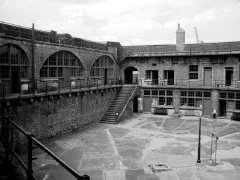
Harwich Redoubt Fort in Harwich, Essex was constructed between 1808 and 1810 to protect the port of Harwich against the threat of Napoleonic invasion. The fort was constructed on a hill, which allowed views in all directions.
French prisoners of war were made to help construct the fort. The fort has a central parade ground. It was originally armed with ten 24 pounder cannons. In 1861 a 68 pounder cannon was added to the fort's weapon range.
Later in 1903 three 12 pounder QF guns were added to the fort. Despite the ongoing modernisation no shot was fired in force. In the 1920s the redoubt was falling into disrepair. The fort was briefly used during the Second World War to house British troops awaiting trial. Restoration started in 1969 and still continues today.
Ghostly Activity
Witnesses have reportedly seen apparitions through the windows and heard unexplained footsteps. Many visitors to the fort have also reported being touched by unseen hands in the lower casements. There have also been many other mysterious noises and apparitions seen by visitors.
The fort is well known for the apparition of a headless soldier. In 1972 a soldier was decapitated by a cable attached to a 12 ton cannon which broke under the strain. It is rumoured that this soldier now roams the fort.
Scare Factor:
Read previous customer Feedback/Testimonials
Information on Landguard Fort
Click to watch previous ghost hunt videos (Opens in a new window)
The next event:
Date: 21st September 2024
Time: 8:00pm - 2:00am
Tickets: £52 per person
Landguard Fort · Felixstowe, Suffolk
///towel.blankets.flat - What's this?
Landguard Fort was built just outside Felixstowe, Suffolk, at the mouth of the River Orwell, Landguard Fort was designed to guard the entrance to Harwich. The first fortifications from 1540 were a few earthworks and blockhouse, but it was James I of England who ordered the construction of a square fort with bulwarks at each corner.
In 1667 the Dutch landed a force of 1500 men on Felixstowe beach and advanced on the fort, but were repulsed by a garrison of 400 musketeers of the Duke of York & Albany's Maritime Regiment (the first English Marines) and 100 artillerymen with 54 cannon. The fort was considered part of Essex in the 18th and 19th centuries; births and deaths within the garrison were recorded as 'Landguard Fort, Essex'.
A new Fort battery was built in 1717, and a complete new fort on an adjoining site was started in 1745 to a pentagonal bastioned trace. New batteries were built in the 1750s and 1780, but the biggest change was in the 1870s where the interior barracks were rebuilt to a keep-like design, the river frontage was rebuilt with a new casemated battery covered by a very unusual caponier with a quarter sphere bomb proof nose. Several open bastions were enclosed, and a mock ravelin block constructed to house a submarine mining contingent.
During the Second World War, it was used as one of the balloon launch sites of Operation Outward. This was a project to attack Germany by means of free-flying hydrogen balloons that carried incendiary devices or trailing steel wires (intended to damage power lines.)
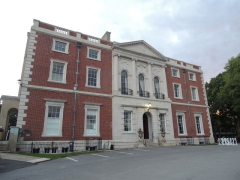
The 10inch gun pit in Left Battery was converted into a Anti-aircraft Operations Room for Harwich in 1939. Visitors as well as local people, have their own experiences of paranormal activity in or around the Fort. The most common being the image of a sailor looking out of the top right window (the side visible from the road). Most reportings were in the 1990s, but occasionally there are still reports of lights at night and being "pushed" whilst visiting the top floors.
Scare Factor:
Read previous customer Feedback/Testimonials
Information on Merley House
The next event:
Date: 30th November 2024
Time: 8pm until 2am
Tickets: £46 per person
Merley House · Wimborne, Dorset
///shakes.water.clots - What's this?
Merley House in Wimborne, Dorset was built in 1756. Merley (originally spelt Myrle) was an ancient manor belonging to the Lords of Canford. In 1751, Ralph Willett purchased the estate and built the larger and much grander house we see today.
A walled garden was built to the North East of the house with an Orangery on the south side. This has survived to this day and used to be known as the Merley Bird Gardens, home to many exotic bird species. It is now the Orangery Suite.
In 1875 the whole estate was sold by auction but there is little information as to whom it was sold until it was bought by Ivor Guest, 1st Lord of Wimborne. In 1927, the MP for South Dorset, Angus Valdemar Hambro purchased the estate in a dilapidated condition, spending two years renovating it.
In 1939 the out break of war meant that the house was requisitioned by the War office. When they left in 1946 the house was again sold at auction. Now down to just 270 acres it was sold in 14 lots and the house was converted into flats.
During the 1960s a holiday park was started, by the present owners, to help finance the restoration of the house. The ground floor was opened to the public and contained a collection of model cars, lorries, airplanes, ships and train sets. Most recently the downstairs was restored again to create spacious and elegant areas.
Scare Factor:
Read previous customer Feedback/Testimonials
Information on Newhaven Fort
Click to watch previous ghost hunt videos (Opens in a new window)
The next event:
Date: 13th September 2025
Time: 8:00pm - 2:00am
Tickets: £52 per person
Newhaven Fort · Newhaven, East Sussex
///awoke.busy.thud - What's this?
Newhaven Fort is a Palmerston fort built in the 19th century to defend the harbour at Newhaven, on the south coast of England. It was the largest defence work ever built in Sussex
Building work commenced in 1864, with a workforce of 250 men and three steam engines. Work was completed in the summer of 1871 and the guns were emplaced in 1873.
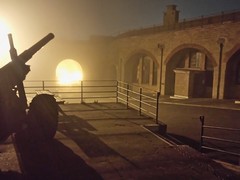
The fort was originally armed on the eastern side in the 1870s with two 9-inch rifled muzzle-loading guns on Moncrieff disappearing carriages, the only such arrangement in the UK. From about 1906 the armament consisted of two modern 6-inch Mark VII breechloading naval guns, and two modern light QF 12-pounder guns for defence against torpedo boats.
The main 6-inch Mark VII guns were replaced in 1941 by a battery of BL 6-inch Mk 24 coastal guns (a modern coast defence version of the Mark VII built during World War II), which were located west of the fort.
The army vacated the fort in 1962. Restoration began in 1982 following a failed commercial redevelopment venture, and 6-inch Mk VII guns have been re-installed in the fort to approximate the 1906 - 1941 armament.
There are numerous reports from visitors to the Fort, when walking into the main tunnels, or the caponier, of being pushed and seeing dark figures slipping into the shadows. Other reports include sounds and smells, people have reported the noises of chains clinking. Some believe it is the ghost of a woman called Martha who committed suicide at the fort. Other occurrences happen in the magazines and laboratory.
The forts numerous exhibitions are also a hot bed of activity. People have reported hearing the sounds of soldiers boots, footsteps and shuffling, moans of suffering have also been heard and reported on numerous occasions.
Scare Factor:
Read previous customer Feedback/Testimonials
Information on Nothe Fort
Click to watch previous ghost hunt videos (Opens in a new window)
This location is available to book for private group events (5-20 people) - price depending on people - see Private Group Ghost Hunts
The next event:
Date: 21st September 2024
Time: 8pm until 2am
Tickets: £50 per person
Nothe Fort · Weymouth, Dorset
///dogs.claim.nest - What's this?
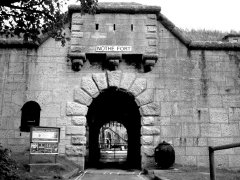
Nothe Fort in Weymouth, Dorset is situated on the shore beside the northern breakwater of the ex-military Portland Harbour, and at the mouth of civilian Weymouth Harbour. Nothe Fort was built in 1872 to protect Portland's harbour, which was then becoming an important Royal Navy base. The fort played an important role in World War II, when the harbour was used as base by the British and American Navy.
In 1956, the fort was abandoned, and in 1961 it was purchased by the local council. It is now a museum and tourist attraction, featuring models, World War II memorabilia as well as original cannons and guns and British and American WWII vehicles.
Nothe Fort has always had a legendary ghostly whistling gunner and many people claim to have heard his eerie whistling in the Fort's extensive underground passageways. Tales of this phantom have been talked about for decades around Weymouth and the Fort affectionately has a passageway dedicated to him. Who this 'shade' actually is, is at this time, unknown.
A survey carried out in 2007 by The National Lottery discovered that the Fort was voted one of the spookiest locations in the UK; in fact staff members sometimes refuse to visit certain areas by themselves.
Scare Factor:
Read previous customer Feedback/Testimonials
Information on Red Lion Hotel
Click to watch previous ghost hunt videos (Opens in a new window)
This location is available to book for private group events (5-20 people) - price depending on people - see Private Group Ghost Hunts
The next event:
Date: 18th May 2024
Time: 8pm until 2am
Tickets: £46 per person
Red Lion Hotel · Colchester, Essex
///forks.yards.senior - What's this?
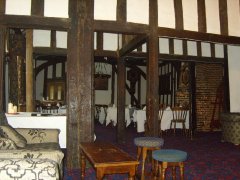
The Brook Red Lion Hotel in Colchester, Essex is a historical Grade I listed building dating back to 1465. Located in the busy town centre of Colchester, Britain's oldest recorded town, The Brook Red Lion Hotel in Colchester is one of the oldest inns in the area.
The Parliament Restaurant at the Red Lion Hotel was once the old Banqueting Hall, still showing its timbered beams.
There are three known ghosts - a small boy that can be seen in the Parliament restaurant occassionally and has appeared in a guest's photograph, a ghostly monk that hangs around in reception, but the most active is Alice Millar.
Alice was a chambermaid at the hotel and was killed by a lover.
Alice has regularly been heard whispering and even talking to staff. There are recent accounts of people's hair being pulled and a womans voice appearing on a video taken in one of the rooms, with no obvious cause.
The original rooms still have their original wattle and daub beams. They are also, obviously, the most haunted.
Scare Factor:
Read previous customer Feedback/Testimonials
Information on Shepton Mallet Prison
Click to watch previous ghost hunt videos (Opens in a new window)
The next event:
Date: 25th May 2024
Time: 9.00pm - 3.00am
Tickets: £59 per person
Shepton Mallet Prison · Shepton Mallet, Somerset
///irritable.bath.ports - What's this?
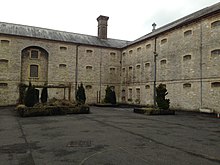
HMP Shepton Mallet, sometimes known as Cornhill, is a former prison located in Shepton Mallet, Somerset, England. Before closure Shepton Mallet was a category C lifer prison holding 189 prisoners.
The prison was opened before 1625, expanded in 1790 and further building work was undertaken in the 1820s and 1830s. This included the installation of a treadwheel for those sentenced to hard labour. In 1843 the number of cells was increased by adding a second storey to each wing. The prison was damaged during a fire in 1904. In 1930 the number of inmates had fallen and the prison was closed.
Following the outbreak of the Second World War in 1939 the prison was reopened as a military prison. It was initially used by the British Army and later by American forces who constructed a new execution block to hang condemned prisoners. It was also used for the storage of important historical documents from the Public Record Office in London, including Domesday Book.
Much of what has taken place here was brutal. In the 17th and 18th centuries men, women and children were kept in horrendous conditions, starving in packed, smallpox-infested cells. Former inmates lie in unmarked graves throughout the grounds. Seven judicial executions took place between 1889 and 1926, but the total number of executions at Shepton Mallet in its early years is unknown. During the Second World War, it was adopted as a military prison by the British and Americans. By the end of 1944, 16 American soldiers had been hanged and two shot by firing squad for crimes that included rape and murder. The notorious gangsters the Krays were among its former inmates.
Scare Factor:
Read previous customer Feedback/Testimonials
Information on Shire Hall Courthouse
Click to watch previous ghost hunt videos (Opens in a new window)
This location is available to book for private group events (5-20 people) - price depending on people - see Private Group Ghost Hunts
The next event:
Date: 19th October 2024
Time: 8.00pm - 2.00am
Tickets: £46 per person
Shire Hall Courthouse · Dorchester, Dorset
///streak.bridges.fries - What's this?
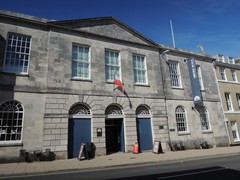
Shire Hall Historic Courthouse Museum in Dorchester, Dorset was Dorset's courthouse from 1797 until 1955. Through that time, it saw everything from the 1834 trial of the Tolpuddle Martyrs to the 1856 domestic abuse case that inspired Thomas Hardy to write 'Tess of the D'Urbervilles', to victims of mesmerism, child perpetrators and American GIs tried during the Second World War.
Discover the depths of the cold, dark cells, before ascending to the dock. Stand in the dock of the famous courtroom, where famous novelist and poet Thomas Hardy was a magistrate from 1884 until 1919.
See where the Tolpuddle Martyrs were held before being brought to trial, thereby sparking the Trade Union movement.
After ending its life as a court in 1955, Shire Hall was used as offices for West Dorset District Council (previously the Rural District Council).
Scare Factor:
Information on Shrewsbury Prison
The next event:
Date: 12th October 2024
Time: 9pm until 3am
Tickets: £59 per person
Shrewsbury Prison · Shrewsbury
///nets.bells.photos - What's this?
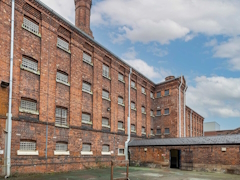
Shrewsbury Prison in Shrewsbury, Shropshire was opened in 1793. The Victorian prison as seen today sits on top of the original Georgian prison, the remains of which are still accessible underneath the current buildings.
The present prison building was constructed in 1877 and decommissioned in 2013. The prison accommodated female convicts until 1922.
The former prison site is adjacent to Shrewsbury railway station which is near the site of the Dana Gaol, a medieval prison. The name The Dana is still often used for the prison.
The prison consists of execution areas, the hanging room and long miserable corridors. A must for ghost hunters!
One not to be missed!
Scare Factor:
Read previous customer Feedback/Testimonials
Information on Slough Fort
Click to watch previous ghost hunt videos (Opens in a new window)
This location is available to book for private group events (5-20 people) - price depending on people - see Private Group Ghost Hunts
The next event:
Date: 13th July 2024
Time: 8pm until 2am
Tickets: £40 per person
Slough Fort · Allhallows, Kent
///cork.pays.dusts - What's this?
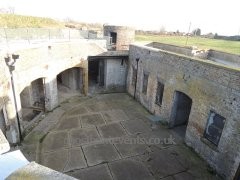
Slough Fort, Allhallows, Kent is a small artillery fort that was built in the north of the Hoo Peninsula in Kent. Constructed in 1867, the D-shaped fort was intended to guard a vulnerable stretch of the River Thames against possible enemy landings during a period of tension with France. Its seven casemates initially accommodated rifled breech loading guns, which were replaced by the turn of the century by more powerful breech-loaders on disappearing carriages, mounted in concrete wing batteries on either side of the fort. It was likely one of the smallest of the forts constructed as a result of the 1860s invasion scare.
All of the guns were removed by 1912, though the fort continued in use during the First World War as a command post. It was decommissioned in 1920 and sold off in 1929 and converted into a small zoo. Before the Second World War; it was used as an observation post from 1938, became part of the local anti-invasion system in 1939-40 and was used as part of the air defence network against V-1 flying bombs in 1944. There was partial restoration in 2012-13 that uncovered previously buried features of the fort.
Ghostly Activity
Whilst on our site visit a strange presence was felt in the Brig (cells) area of the fort, as well as previous visitors hearing a girl laughing in the right wing battery part of the Fort.
Scare Factor:
Information on The Brickworks
The next event:
Date: 20th April 2024
Time: 8pm until 2am
Tickets: £46 per person
The Brickworks · Southampton, Hampshire
///hears.grinders.signs - What's this?
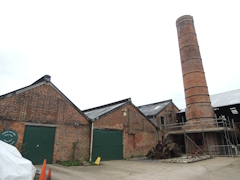
Bursledon Brickworks in Southampton, Hampshire was built in 1897. The new brickworks were innovative for their time as they used a large brick making machine and known as a stiff clay extruder. The manufacturers claimed it was capable of making 40,000 bricks a day. The machine was run by a steam engine.
Once the bricks were made they were dried in large drying sheds. These were heated via underfloor pipes and the bricks took a set time to dry. When they had dried completely the bricks were then taken down to the kiln.
The kiln was a continuous kiln with twelve chambers. Each chamber could hold up to 26,000 bricks at a time. The kiln was always burning with the chambers going from cold to over 1000 degrees Centigrade every 15 days or so.
In 1903, the brickworks changed its name to The Bursledon Brick Co. Limited or (B.B.C. Ltd.). This coincided with the extension of the southern complex and the addition of another complete works to the north. This was further extended in 1935 with the addition of a third unit. With the extra capacity, the brickworks was producing in excess of 20 million bricks a year. They were one of the main producers of bricks in the region.
After the Second World War, the family business was amalgamated with the Sussex and Dorking Brick Company and in 1959 became Redland Holdings Ltd.
The brickworks finally closed in 1974, and the site was later saved from demolition by the Hampshire Buildings Preservation Trust. Bursledon Brickworks Museum houses the brick kiln, chimney, drying sheds, boiler and engine house.
Ghost activity includes the sound of; whistling, voices, knocking as well as shadows and a black mass. Are these caused by the workers going about their daily routine in the workshops?
Scare Factor:
Read previous customer Feedback/Testimonials
Information on Tide Mill
The next event:
Date: 27th July 2024
Time: 8pm until 2am
Tickets: £45 per person
Tide Mill · Woodbridge, Suffolk
///solar.overhear.always - What's this?
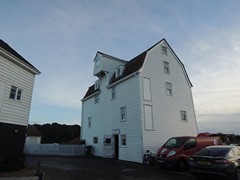
Woodbridge Tide Mill in Suffolk was one of the first tide mills in the country, and was unquestionably the last one working – operating for well over 800 years.
The earliest record of a tide mill on this site by the River Deben is in 1170.
In 1793 the present mill was built on the site of earlier ones. By the 1950s it had become the last working tide mill in the country, but in 1957 finally closed. It was saved in 1968, restored and opened to the public in 1973.
Will you hear the cries of William Bacon, a mill worker, 29 years old who suffocated to death on 6th December 1870?

Scare Factor:
Information on Whitstable Castle
This location is available to book for private group events (5-20 people) - price depending on people - see Private Group Ghost Hunts
The next event:
Date: 15th November 2024
Time: 7:30pm until 00:00
Tickets: £46 per person
Whitstable Castle · Whitstable, Kent
///strange.blackmail.manager - What's this?
Whitstable Castle, Whitstable, Kent was built from copperas works in 1790 and this formed the Octagonal Tower. The black tar of the works can still be seen on the walls. The Pearson’s home was known as The Manor House and little is known about its layout except that in 1798 the chimney to the tower was taken down and a staircase put in its place.
The family spent every summer at the house, from their Greenwich based home. Charles Pearson died in 1828. His son Charles Pearson Junior, born in 1786, inherited the estate and carried on using the house as a summer residence. The Tower fell into neglect and he sold it to his cousin by marriage Wynn Ellis.
Wynn Ellis had the most significant impact and made the greatest contribution towards shaping the building and its grounds. In 1897 Tankerton Castle, as it was now known, was sold to Thomas Adams. He added a billiard room to the North of the original tower. This provided a good room with feature fireplace on the ground floor with servants’ quarters upstairs but obstructed the fine sea views of Whitstable Bay. Later this became the Council Chamber.
In 1921 the Castle passed into the hands of Mr Albert Mallandain. A paper manufacturer, he and his wife used it as a summer residence. Changes were made in the building, with a fine new staircase and extensive additional oak panelling to match original designs. The Whitstable Urban District Council, despite some some opposition, bought the Castle for the town in 1935.
Following the local government re-organisation in 1972, the Castle remained empty until 1975 when at the instigation of The Whitstable Society the "Castle Centre Association" was created with the aim of using The Castle for the benefit of the people of Whitstable. In 2004 a new committee with its first Castle Co-ordinator began a complete interior upgrade and Weddings and Civil Ceremonies could commence. This brought in much needed income to regenerate the Castle and enable it to return to its original role as a venue for family celebrations, major local events and community activities. A heritage Lottery Grant enabled a new Trust to be formed in 2008 to take over the running of the Castle and Gardens.
Other Haunted Locations
If you are aware of other locations, or if you are the owner of a location and want an investigation (public or private) please contact us


